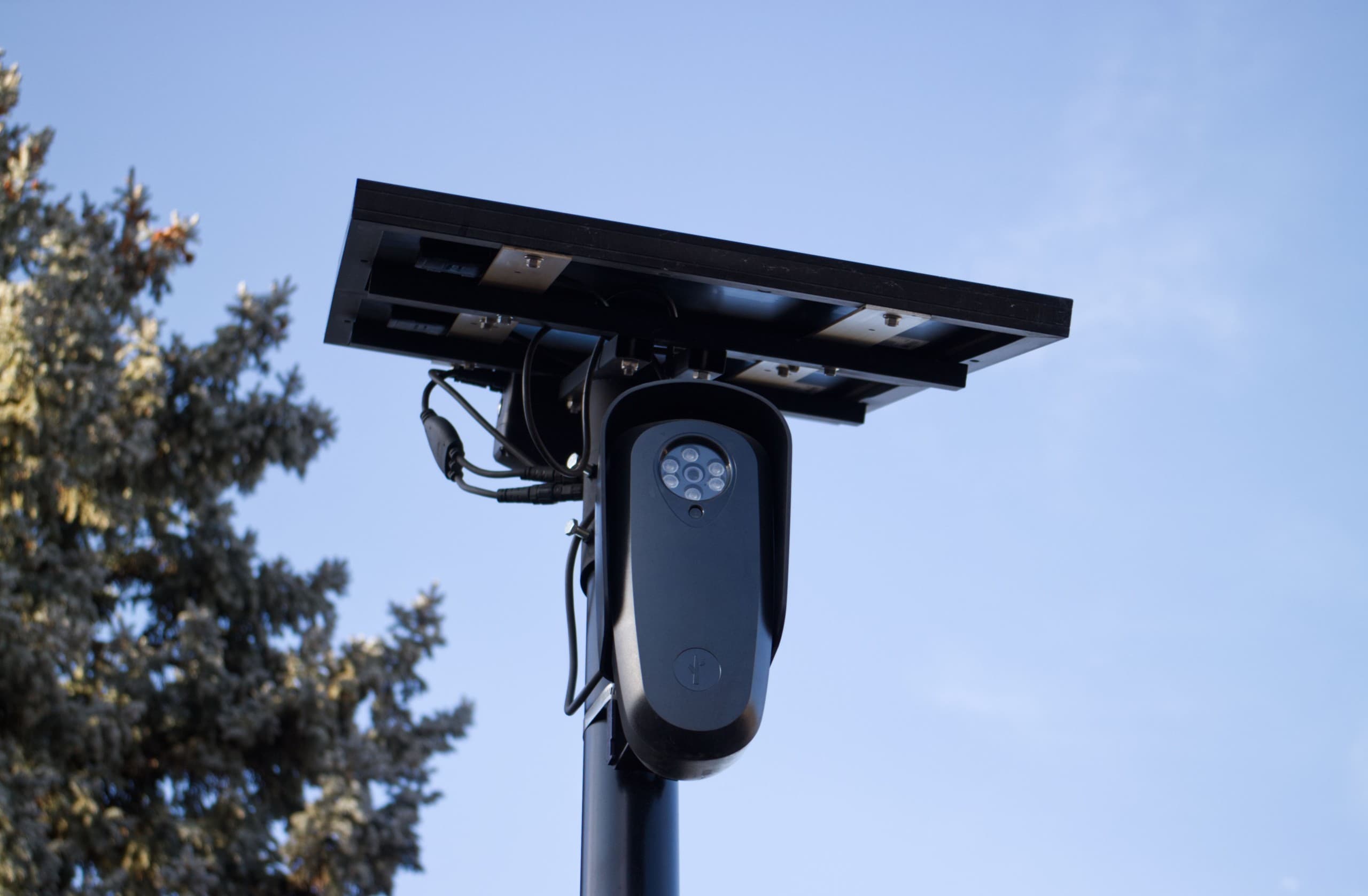
On July 16, 2026, Gibbs Mura filed an amended class action complaint against Motorola and its subsidiary, Vigilant, alleging that the companies’ automatic license plate reader (ALPR) network collected and shared massive amounts of sensitive vehicle data, depriving California drivers of their privacy rights under California law.
If you’ve driven in a California city like Pleasanton, Sacramento, Modesto, Merced, or Livermore, then your vehicle, location, and movement data may have been tracked by Motorola’s ALPR systems and illegally shared with out-of-state or federal law enforcement agencies. Concerned about your privacy? Contact Gibbs Mura to take action.
What is Motorola and Where are its License Plate Reader (ALPR) Cameras?
Motorola develops surveillance technologies used by law enforcement, government entities, educational institutions, and private organizations.
Motorola’s license plate recognition systems, which capture images and track vehicles, are deployed in California and nationwide, and may be installedin or around:
High-speed and high-volume roadways
University campuses and educational facilities
Parking lots
Business and retail areas
Motorola also operates a platform known as Vigilant VehicleManager which is designed to aggregate and analyze license plate reader data. Vigilant serves as a centralized database where data collected from cameras is stored and made available to law enforcement customers.
What Motorola is Doing with Your Data:
Motorola’s ALPR cameras allegedly enable comprehensive tracking of individuals’ daily movements. Rather than focusing on specific suspects, these systems are designed to capture images of, and surveil, every passing vehicle.
According to the Northern California Regional Intelligence Center (ACRIC), ALPR systems could be used to infer more information than just license plate numbers. Allegedly, these systems could also draw conclusions about an individual’s:
Personal relationships,
Marital fidelity,
Religious observance,
and political activities
and share it with law enforcement and corporations.
Gibbs Mura Files Class Action Lawsuit Against Motorola and Vigilant
The amended class action complaint, filed July 16, 2026, alleges that Motorola and its subsidiary, Vigilant, knowingly facilitated unlawful cross-jurisdictional sharing of California ALPR data, maintained an inadequate privacy policy, and profited from drivers’ sensitive data.
The lawsuit contends that Motorola and Vigilant’s data sharing practices have serious implications for everyday people. ALPR databases can amplify discriminatory policing practices that disproportionately harm people of color and low-income communities. Because ALPR systems can generate inaccurate results, innocent people have reportedly been detained, harassed, and even held at gunpoint by police due to system errors. ALPR networks are not just invasive — they may also risk the lives of law-abiding citizens.
Additionally, the amended complaint alleges that these systems can threaten people seeking constitutionally protected healthcare, including access to abortion and gender-affirming care. In May 2025, Texas police used an ALPR database to track a woman they claimed had a self-administered abortion. The search allegedly involved 83,000 ALPR cameras, including those in states where abortion is legal.
Gibbs Mura is committed to holding Motorola accountable for unlawful ALPR data-sharing that threatens healthcare, public safety, and freedom of speech. The class action lawsuit seeks compensation for affected California drivers and calls for the Defendants to end their illegal data-sharing practices.
Lawsuits Against Motorola for Data Privacy Practices
Motorola has been hit with other lawsuits related to how it collects and stores data; for example, the company was sued in 2024 for allegedly violating Illinois law by collecting, storing, and disclosing individuals’ biometric data to law enforcement agencies via facial recognition technology known as “FaceSearch.” The lawsuit settled in 2025 and Motorola had to pay money to a class of Illinois residents who may have been impacted.
Our Privacy Lawyers’ Experience with Taking on Companies like Motorola
On April 3, 2026, Gibbs Mura filed an amended class action lawsuit complaint against Flock Safety for using its ALPR cameras to track, and illegally share, data about the movement of millions of Californians. A federal judge consolidated the case with two other similar lawsuits against Flock Safety. The consolidated case is known as In re Flock Safety ALPR Litigation (Case No. 3:26-cv-02375) and is now being litigated by a set of court-appointed lead counsel in the Northern District of California.
Gibbs Mura has also prosecuted some of the largest and most influential privacy and data breach cases in the country. In 2025, Gibbs Mura secured a $27.5 million settlement against Thomson Reuters alleging its CLEAR platform violated millions of Californians’ privacy. Gibbs Mura also helped achieve the largest data breach settlement in history in the Equifax Data Breach Lawsuit, securing $1.5 billion from Equifax after its 2017 data breach exposed the data of over 145 million Americans.
Automatic License Plate Readers & CA Data Privacy Protections: Know Your Rights
California has some of the nation’s strongest privacy protections—laws specifically designed to prevent the kind of mass surveillance, location tracking, and large-scale data sharing that Motorola cameras enable. These include:
No Out-of-State Data Sharing:
Public agencies “shall not sell, share, or transfer ALPR information, except to another public agency” (§ 1798.90.55(b)). California law defines “public agency” as California state and local entities only—not federal agencies or out-of-state police.
Required Security Safeguards:
ALPR operators must “maintain reasonable security procedures and practices, including operational, administrative, technical, and physical safeguards, to protect ALPR information from unauthorized access, destruction, use, modification, or disclosure” (§ 1798.90.51(a)).
Mandatory Privacy Policies:
Operators must implement usage and privacy policies ensuring data collection and sharing “is consistent with respect for individuals’ privacy and civil liberties,” and require that data “only be used for the authorized purposes” (§§ 1798.90.51(b), 1798.90.52(b)).
Based on the alleged sharing of California residents’ license plate data with out-of-state and federal agencies in direct violation of state privacy protections, affected individuals may have legal claims enabling them to recover damages. Speak with our legal team today.
Our License Plate Reader Data Privacy Lawsuit Team
☝️ Copy the Question above too to style the expander properly.
What are automated license plate readers (ALPR)?
Automated license plate readers (APLR) are computer-controlled camera systems that automatically capture, analyze, and store vehicle information. ALPR cameras use optical character recognition technology to convert images of license plates into text files. ALPR-captured images, text files, and other metadata like location, date, and time, are maintained in a database — sometimes for years — without drivers’ knowledge or consent.
How are ALPR cameras different from traffic cameras?
☝️ Copy the Question above too to style the expander properly.
How are ALPR cameras different from traffic cameras?
Traffic cameras capture images of a traffic law violation, such as running a red light or speeding. These cameras are often triggered only when an infraction occurs and are not designed to track and surveil drivers. On the contrary, ALPR systems are designed to capture license plate and vehicle information for every single car that passes by them, 24/7. These systems track drivers without their knowledge, and create a constant record of their movements, even when no traffic violation is suspected.
Is my vehicle being tracked by ALPR cameras?
☝️ Copy the Question above too to style the expander properly.
Is my vehicle being tracked by ALPR cameras?
If you have driven in Alameda County (Pleasanton, Livermore, Hayward, Castro Valley), Merced, Modesto, Sacramento, Riverside, Chico, Hesperia, Salinas, Monterey, San Luis Obispo, Carlsbad, or the Los Angeles area, your vehicle may have been tracked by Motorola’s ALPR cameras. These cameras often go unnoticed to passing drivers, and may be tracking your vehicle without consent or knowledge. If you think you may have been impacted, contact our legal team for a free and confidential consultation.
Where are Motorola’s ALPR systems located?
☝️ Copy the Question above too to style the expander properly.
Where are Motorola’s ALPR systems located?
Motorola’s ALPR systems are located in California and nationwide. These cameras are mounted in fixed locations, such as near high-volume roadways, in neighborhoods, and near business and commercial areas, and on moving vehicles, like police cars.
Did your firm also file a lawsuit related to Flock Safety’s ALPR systems?
☝️ Copy the Question above too to style the expander properly.
Did your firm also file a lawsuit related to Flock Safety’s ALPR systems?
Yes. Gibbs Mura filed an amended class action complaint against Flock Safety on April 3, 2026 for allegedly using its automated license plate reader (ALPR) cameras to track millions of Californians’ daily movements and to illegally share this information with out-of-state law enforcement agencies, violating California privacy laws. Although we are no longer accepting new clients, you can read more about the Flock Safety lawsuit here.